We would go further: Bath is better in the rain than most English cities, because almost everything worth doing here is indoors and within ten minutes’ walk of everything else. On a wet Tuesday you can go from a Roman temple to a Georgian art collection to a rooftop thermal pool without ever being outside for more than a few minutes at a time. The stone goes darker and the crowds thin out. It is one of our favourite versions of the city.
Here is the wet-weather day, in the order we would do it.
Start with the Roman Baths
The obvious answer, and the correct one. It is almost entirely under cover, it takes a good two hours if you let it, and the audio guide is genuinely well made rather than dutiful. The Great Bath itself is open to the sky, which sounds like a problem and is not: rain falling onto steaming water in a Roman bathhouse is a better sight than sunshine on it, and everybody else is at that moment deciding to go somewhere drier.
Book ahead regardless of the forecast. Everyone in Bath has the same idea when it rains and the same idea is this one.
Then Bath Abbey, thirty seconds away
You come out of the Roman Baths into the Abbey courtyard, so this is less a decision than a consequence. The Abbey has more glass than wall. The fan vaulting and the enormous east window make it one of the lightest churches in England, which is precisely what you want on a grey day. There is usually music or an organist practising, and it costs very little to sit down in it for twenty minutes.
The tower tour is weather-dependent and views from the top on a wet day are not the point, so save that for the sunshine.
Thermae Bath Spa, the whole argument for rain
If you do one thing in Bath in bad weather, do this. The rooftop pool is open-air, naturally warm, and the entire experience improves when it is raining: you are shoulder-deep in mineral water at body temperature, steam coming off the surface, cold rain on your face, the Abbey lit up in front of you. We have taken visiting friends there in horizontal drizzle and had them describe it afterwards as the best hour of the trip.
It is expensive. It is also the single most memorable thing the city offers, and we have never met anyone who regretted the money. Book well in advance. It fills up, and it fills up fastest when the forecast is bad.
The Holburne Museum
At the far end of Great Pulteney Street, which is itself worth the walk: the longest, straightest, grandest street in Bath, with the museum closing the view at the end of it like a full stop. The Holburne holds a Georgian collection in a building that is half eighteenth-century and half modern glass extension, and the two halves argue with each other in a way we find rather good.
It is quieter than the Roman Baths by a wide margin and the café at the back looks out into Sydney Gardens. Check what is on and what the current admission arrangements are before you go. The temporary exhibitions are usually the reason to make the trip.
The Victoria Art Gallery, by Pulteney Bridge, is the smaller alternative if you have less time. Twenty minutes well spent, and you are back in the centre immediately afterwards.
A long lunch, taken seriously
The correct response to rain is not to hurry through it. Sally Lunn’s is the most characterful stop in Bath and the building is part of the point: low ceilings, uneven floors, and the enormous Bath bun that made the place famous. It is touristy in the way that very old things become touristy, which we do not hold against it.
The Pump Room is the other side of that coin: proper afternoon tea in a Georgian assembly room with someone playing the piano, right beside the Roman Baths. It is a performance and it knows it. On a wet afternoon, sitting under those chandeliers listening to the rain on the windows, it is exactly right.
If you want lunch rather than an occasion, The Ivy is lively and reliable, and Beckford Canteen does seasonal British cooking in a room that feels looked after rather than designed.
Sally Lunn's
A historic Bath tea room, famous for its distinctive Bath bun and an especially characterful stop.
The Pump Room
Classic afternoon tea in one of Bath's most iconic Georgian settings, beside the Roman Baths.
The Ivy Bath Brasserie & Garden
A lively brasserie in the heart of the city, lovely for lunch, dinner or a special afternoon tea.
Beckford Canteen
A welcoming Bath restaurant with seasonal British cooking and a relaxed, well-looked-after feel.
Or stay in
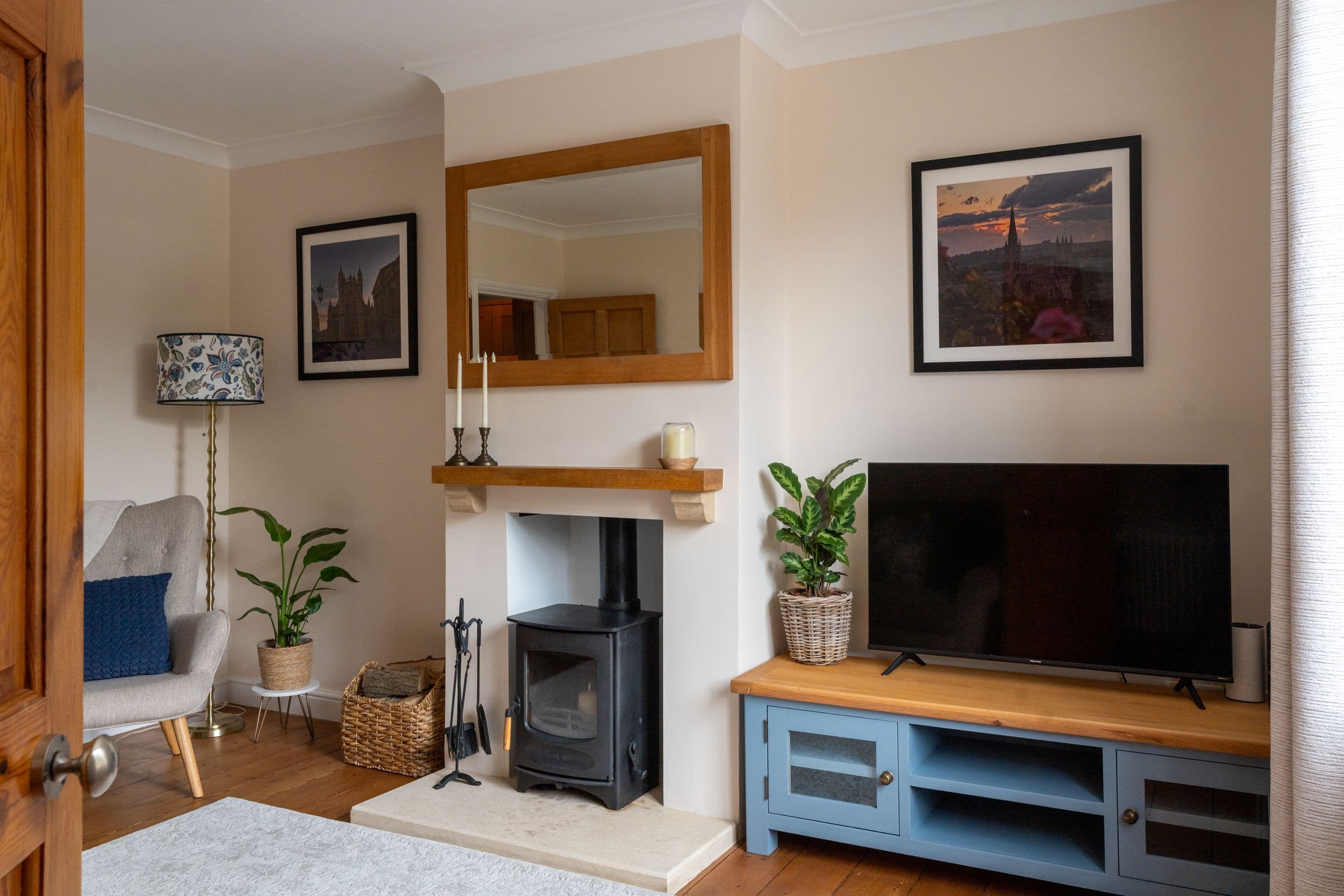
There is no rule that says you have to go out. The living room at the front of the house has the wood burner and the armchairs, the games are in the cupboard behind the sink area in the dining room, and there are two televisions. Pick up something from the shops on the way back, cook properly on the range, and let the afternoon go. That is a perfectly good use of a wet day in Bath, and rather more restful than the alternative.